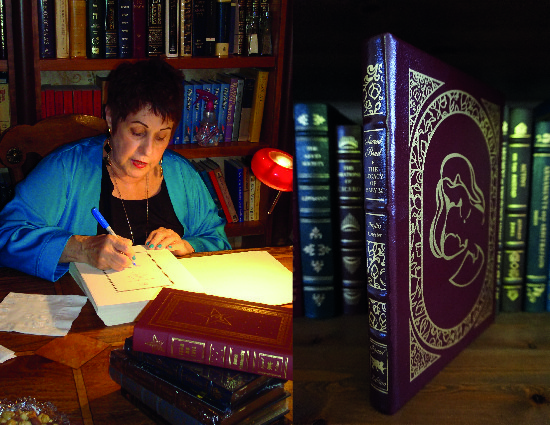
Phyllis Chesler's Response to Renate Klein's Surrogacy Article
Nov 29, 2026
I sent this response to all 64 of Renate’s correspondents, to the LesbianResistanceNZ group, and to the Feminists Against Anti-Semitism group in the UK.
Dear Sister Feminists:
Like you, I’ve also received Renate’s article about surrogacy. Thank you, Renate, for sending it.
As you may know, I’ve been a pioneer in terms of the surrogacy issue since the mid-1980s. I organized demonstrations outside the courthouse in the Baby M case, did media on behalf of this issue, submitted an amicus brief in and spoke at the triumphant press conference after lawyer Harold Cassidy persuaded the NJ Supreme Court to criminalize commercial surrogacy in New Jersey. Alas, of course, that has been reversed.
I also organized a demonstration outside of surrogacy pimp Noel Kean’s NYC office, spoke at the radical feminist conference about the subject, which was held at the NYU Law School, and then published a book: Sacred Bond: The Legacy of Baby M, which was translated into Japanese and Korean. I went on to talk about this issue rather tirelessly in the media. In the 21st century, I also worked against various bills that gave far more power to the wealthy adoptive couples than to the birthmother, aka “the surrogate uterus.”
Nevertheless, I could never sign a petition supporting Reem Al Salem or relying upon such a woman’s judgement. Rather than write about this myself, I instead choose to share the excellent article written by the LesbianResistanceNZ group, whose views I share.
As the world again has turned on the Jews and adopted the most lethal Blood Libels, I wrestle with my principles day and night. At this moment in history, I find I can only work with those feminists who understand this and who respect all such issues. The dangerous Jew and Israel hatred of so many radical feminists whose issues I myself have long pioneered has silenced me for the moment. Please consider the importance of a necessary moral compass as you continue your work. The Feminists Against Antisemitism, primarily based in UK, have done so without sacrificing their radically feminist principles.
Here’s my problem with all those feminists who embrace Reem Al Salem no matter what. It is their failure to acknowledge the double standard with how Alsalem views sexual or reproductive violence, which is antisemitic, anti-Zionist, and anti-feminist (if the women involved happen to be Jews or Israelis). The feminist refusal to call this—merely to acknowledge this—strongly indicates that they whole-heartedly agree with Alsalem’s view of Israel, Palestine, Jews, and Muslims. Such feminists have no conflict. In fact, they think that I should praise Reem and sign letters and petitions on her behalf because my concerns about the survival of both the Jews and the Judeo-Christian West are misguided.
My Best,
Phyllis Chesler
LesbianResistanceNZ
@lesbianresist
October 28, 2026
LesbianResistanceNZ 🎗✡️ on X: “WHOSE RAPE IS BELIEVED?” / X
WHOSE RAPE IS BELIEVED?
We asked UN Special Rapporteur Reem Alsalem a straightforward question about rape on 7 October. After a lengthy email exchange, we still don’t have a straightforward answer.
There is a question we thought would be easy for the United Nations Special Rapporteur on Violence against Women and Girls to answer:
Do you personally accept, on the evidence now available, that rape occurred during the attacks of 7 October 2023?
We put that question to Reem Alsalem during a lengthy private email exchange. She gave us detailed explanations, referred us to UN procedures and investigations, and challenged us to reconsider our assumptions. We took her explanations seriously.
But we never got a plain answer to that question.
We had asked because we noticed a striking difference in how she talks about violence against Israeli and Palestinian women. We wanted to understand whether she applied the same standards of evidence to both.
Alsalem has earned quite a bit of admiration among feminists. Her opposition to prostitution, surrogacy, and replacing sex with “gender identity” in law has made her an important voice in the campaign for women’s sex-based rights.
We appreciate aspects of her work, but agreement on one set of issues doesn’t mean we can’t scrutinise her other positions. And feminists shouldn’t suspend their critical thinking just because a prominent woman says things they want to hear.
Especially when the subject is rape.
Certain here, cautious over there
On 20 November 2023 - just six weeks after the Hamas attacks - Alsalem spoke about reports of sexual violence that may have occurred. She stressed the need for verification and investigation. At the same time, she was already describing the suffering of Palestinian women in terms of war crimes, crimes against humanity, and an unfolding genocide.
In 2025, her language about Israel got even stronger. She described the deliberate killing of Palestinian women and girls, the intentional destruction of their lives and bodies, and what she called “femi-genocide” - violence intended to destroy Palestinian women and the continuity of their people.
Here, she’s making claims about responsibility and intent, she is not just describing what happened.
That’s quite extraordinary when we compare it with her reluctance to say that rape happened during the attacks of 7 October.
To establish that an action is genocide, it is necessary to prove the intention to destroy a protected group, in whole or in part, so hers is an enormously serious conclusion. She was talking about genocide within weeks of the beginning of the war.
Establishing that rape occurred during the October 7 attacks is a much narrower question. It doesn’t require proving that Hamas ordered rape, that rape was an organised policy, or even identifying individual rapists. Alsalem condemned Hamas’s killings and hostage-taking. She acknowledged sexual violence against Israeli women and called for an investigation. But when we asked specifically about rape, she got much more cautious:
When we asked her directly whether she accepted that Israeli women were raped during the October 7 attacks, she answered, “See my response to this in the statement”. Then we asked whether she accepted Pramila Patten’s findings and again, she directed us to the same statement.
Reports must be independently verified. Evidence has not reached her mandate. She hasn’t been allowed to visit Israel. Particular acts could not confidently be attributed to Hamas or other Palestinian armed groups. Independent inquiries have limitations. And so forth.
Fair enough, as far as some of these points go. But none of them explain why she is still so unwilling to answer our much narrower question if she believes that rape occurred, especially after Pramila Patten’s UN mission. We weren’t asking Alsalem to make an official finding under her mandate. We were asking whether she - personally - accepted the findings of another UN expert. They are two different things.
How can Alsalem talk with such certainty about Israel’s genocidal intentions and at the same time refuse to say whether she accepts that rape occurred on 7 October, although another UN expert found reasonable grounds to believe that it did?
A finding that won’t go away
In March 2024, Pramila Patten, the UN Special Representative on Sexual Violence in Conflict, reported the findings of her 17-day mission to Israel. She and her team found reasonable grounds to believe that rape, including gang rape, occurred at several locations during the October 7 attacks.
Patten’s team did not simply accept everything they were told. They said that they came across unfounded allegations and that they could not verify others. The mission was not a criminal trial, and Patten did not pretend that her team had established every allegation or identified every perpetrator. The mission had limitations, which she acknowledged. However, their findings were substantial and devastating, and let’s not forget, they came from a specialist UN mission examining conflict-related sexual violence.
In an October 2025 interview with Julian Vigo and Heather Brunskell-Evans on the Savage Minds podcast, Alsalem went considerably further. Referring to the UN Commission of Inquiry’s June 2024 report, which documented a pattern of sexual violence during the October 7 attacks but could not independently verify allegations of rape, she said:
“So the whole manufactured lie that Israel spun about what happened on that day has been debunked by an independent mechanism.”
Alsalem was also challenging the wider claims of widespread and organised rape. But the Commission of Inquiry’s inability to independently verify rape allegations doesn’t prove that rape hadn’t occurred, let alone that the allegations were “manufactured”. It also didn’t invalidate Patten’s separate finding that there was reasonable grounds to believe rape and gang rape had happened.
For someone who insists on such scrupulous standards of evidence, that’s quite a jump. But knowing all this, Alsalem publicly declared in November 2025:
“No independent investigation found that rape took place on the 7th of October.”
Alsalem’s defence relies on one distinction: Patten’s mission was not a full criminal or human rights investigation. True. But it was a UN mission that examined evidence of sexual violence and found reasonable grounds to believe rape and gang rape had occurred.
Apparently, determining genocidal intent is not as difficult as acknowledging that rape occurred during the October 7 attacks. We would really like to understand how that works.
Two standards for rape
In February 2024, Alsalem joined other UN experts in publicising allegations of sexual violence against Palestinian female detainees, including reports that at least two women were raped. The statement used the word reportedly and did not pretend that those particular rapes had been proven beyond doubt. The joint statement also said that sexual violence is often underreported, because victims fear stigma and retaliation.
We agree.
But that’s also true for Israeli women, especially those who were murdered and can never testify. Alsalem explained to us that Palestinian victims and their representatives had given her information that could be independently assessed. She said she hadn’t received comparable first-hand material about what happened on October 7. She also pointed out that Israel had not facilitated visits she had requested.
We tried to find out but couldn’t find the original visit request or a public Israeli explanation for not facilitating her visit. However, Israel did facilitate Patten’s mission. The fact that Alsalem couldn’t travel to Israel does not mean the findings of another UN expert are invalid.
In the Savage Minds podcast, Alsalem turned the volume up on her February 2024 statement. Speaking about information she had received about Palestinian women, she said, “I ascertained that rape had happened”. She explained that she had received credible information directly. Fair enough. But why does she seem so unwilling to even say whether she accepts another UN expert’s findings concerning Israeli women?
Our whole correspondence with Alsalem had been triggered by a viral video of former Israeli hostage Ilana Gritzewsky who confronted her at the UN Human Rights Council. And Gritzewsky wasn’t the only woman raising the issue that day. Immediately before her, Meital Nir Tal had presented Silenced No More, a nearly 300-page report documenting sexual violence during the October 7 attacks and against hostages. The report is based on hundreds of testimonies and extensive photographic and video material.
So a detailed, large, new report was presented and then Alsalem heard directly from a former hostage. All this happened during the same UN session.
On the occasion of her visit to New Zealand in August this year, we reposted a video clip of this UN session, which was posted on X by UN Watch. The clip uses a split screen, showing Gritzewsky speaking and Alsalem apparently listening. Alsalem told us it was misleadingly edited to suggest she never looked at Gritzewsky, but that in fact, she had looked at her. The original UN recording is available, but doesn’t establish whether she looked at her or not.
Both Alsalem and Gritzewsky afterwards confirmed that they were in contact, and Alsalem told us in September that they planned to meet in mid-October. We have found no public confirmation that the meeting actually took place.
When the questioner becomes the accused
Throughout our exchange, we had acknowledged Alsalem’s condemnation of Hamas’s violence. We also acknowledged her explanation about her mandate, her lack of access to evidence, as well as her cooperation with Israeli women on other matters. We were not trying to trap her into declaring that every allegation was proven. We asked one question about rape.
Her final reply surprised us.
Rather than answering our simple question, she challenged us to send her externally verified evidence and wrote, “I will wait”.
Then she demanded to know if we, in turn, acknowledged rape and sexual violence against Palestinian women and men. Shockingly, she mooted that we considered the Palestinian women’s allegations false, that we believed they deserved such treatment, and asked if we thought Israel would never commit such crimes:
“Finally, I think you also need to clarify your positions regarding violence committed by Israel against Palestinian women: So you need to clarify publicly whether you whether based on the reports of Palestinian women and the results of investigations by independent human rights commissions you acknowledge that Palestinian women and men have been subject of sexual violence by Israel? If yes, what will you publicly say about this? Will you condemn that violence? If not, why not? Is it because they are making false allegations? Is it because they deserved it because of 7th of October? Is it because Israel does not engage in such action as a matter of principle? As I said, you must also walk the talk and apply the same standards that you apply to Jewish and Israeli women to Palestinian women.”
These are repugnant insinuations. Nothing we wrote remotely suggested that Palestinian women were lying, that they deserve rape, or that Israeli forces are incapable of committing it. Faced with a perfectly legitimate question about her own statements, the UN Special Rapporteur chose instead to interrogate our morality. Extraordinary!
Surely a UN Special Rapporteur has a bigger responsibility to account for her public statements than two women from New Zealand have to account for theirs. We didn’t expect her to answer for every crime in this war. We just expected her to answer for her own words.
One of us grew up hearing her grandmother’s terrified warning, “Die Russen kommen!” (”The Russians are coming!”). The other grew up hearing that rape was part of the spoils of war. Different memories, but the same horrifying understanding: Women have long been made to pay for wars we didn’t start. Rape often was - and is - a means of terrorising women, humiliating families, ripping communities apart, and may even be a way of trying to erase communities.
That is why the word matters - whoever the victims are.
We asked the UN Special Rapporteur on Violence Against Women and Girls whether she personally accepts that rape occurred during the attacks of 7 October.
After a lengthy back-and-forth, we still don’t know her answer. We only know what happens when we ask.