My Work Appears in Romania
And in Turkey and in Lithuania
Sep 30, 2026
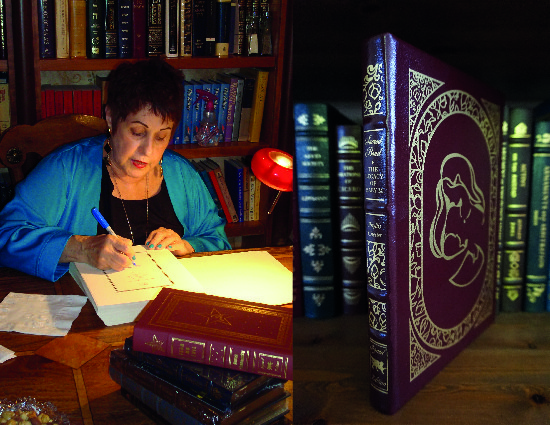
Yesterday, to my surprise, Google sent me this notice. I otherwise would not have known any of this. I guess it's a very good thing, to be so privileged so as to have written a book that has traveled around the world and through time to reach so many readers. See the review below, in Romania Journal.
It's been 54 years since I first published it. I might be the only one alive now who stands able and willing to criticize its shortcomings, blind spots, limitations. I might also want to expand it quite a bit. I did so, only once, when I wrote a new introduction to it in 2005. But I did not go far enough. 'Tis true, many of the themes in Women and Madness I developed further in my other nineteen books.
Once, the woman who read this work for an audiobook, perhaps a decade ago, perhaps a bit less, called me and said: "How relevant, how timely your book remains."
I responded: "Oh, that is so depressing to hear."
She was, of course, amazed, confused, but then I explained: "I had hoped that women would have come a bit further by now..."
Then there is this. I know too much about the history of the Jews in Romania, in Lithuania, and under the rule of the Turkish Ottoman Empire to be entirely happy about sharing a work by a Jewish author, a Jewish woman. Just read the memoir written by Ruth Kluger, with the assistance of her friend Peggy Mann, to understand what happened to Romanian Jews in the 1930s and very early 1940s.
For years, I refused to allow this book to appear in Spain in honor of the Abraham Lincoln Brigade and because Franco ruled the country. But then, I caught hold of myself and regretted this choice--Woman and Madness is now in Spanish. (Jews did not have an easy time of it in Spain either; we still don't.)
Anyway, my work has also appeared in Japan, China, and South Korea--and when that happened, I felt that I'd crossed a sound barrier of sorts. This is the only book of mine that has been translated into Hebrew. This is a great puzzlement indeed.
I consider all this humbly, but also as truly great birthday presents. I turn 86 tomorrow on October 1st. Always, my birthday is always close to the Jewish New Year, to God's creation of the world. We are all "b'zalmo" and contain holy sparks, divine light--you, me, all humanity.
Women and Madness: The Groundbreaking Book Changing Psychiatry
"Women and Madness", the Pioneering Book That Changed the Way We Talk About Women and Mental Health.
Sep 29, 2026
“Why can a woman be considered mentally ill when asserting her sexual, economic, or intellectual autonomy?”, “Why are women pathologized, instead of receiving support, when they react naturally to abuse and stress, including the long-term stress associated with second-class citizenship status?“. These are two of the essential questions to which Dr. Phyllis Chesler, one of the iconic figures of feminism, offers answers in the book Women and Madness.
Published for the first time in Romanian by Editura Trei, in the “Psihologia pentru toți” (Psychology for All) collection, the volume—which has sold over 3 million copies worldwide over time—analyzes how women have been understood, diagnosed, and treated within the medical and psychological system.
Described as “intense, incisive, remarkable” and bringing “a pioneering contribution to transforming psychiatric thought and practice through a feminist lens,” according to The New York Times Book Review, Women and Madness was the first work to address openly and candidly the relationship between women’s status and the social norms that converted difference and psychological distress into punitive labels. Starting from this premise, Dr. Phyllis Chesler questions the very definition of madness and how this label was applied as a diagnosis for the purposes of invalidation and erasure. Throughout the chapters, she exposes the distorted lens through which women were viewed and, often, removed from communities or their own families through psychiatric diagnoses, institutionalized, and abused in asylums. Interweaving accounts from 60 women who lived through such experiences with an analysis of women’s roles in real life, literature, and mythology, Chesler highlights this dangerous double standard by which women are judged psychologically and psychiatrically.
In this landmark volume—not only for psychology, but also for history and the universal understanding of women’s status—Phyllis Chesler traces, drawing on her professional and life experience across many countries and diverse societies, how these standards vary according to gender, race, social status, or sexual orientation, offering a broad perspective on women’s experiences in different cultural contexts.
First published in 1972, Women and Madness was received extraordinarily well by female readers. Garnering hundreds of positive reviews, it was translated into numerous languages, including Japanese and Hebrew. As the author shares in the book’s introduction, she received over 10,000 letters from readers, which she kept and which confirmed her theories. In contrast, within academia and among professionals in the field, her analysis regarding the use of diagnostic labels to stigmatize women, alongside her explanation of why more women than men—regardless of behavior—became psychiatric patients, were ignored, dismissed as sensationalist, or harshly criticized. Her statistics and theories were declared “wrong,” and Chesler was accused of exaggerating regarding the institutions of marriage and psychiatry, as well as “over-romanticizing” archetypes, particularly those of goddesses and Amazons. “Like many feminists before me, I became a ‘circus dog’ on the feminist academic and professional circuit. Fortunately, I was on the verge of obtaining a tenured position at a university; and also fortunately, neither my father, nor my brother, nor my husband wanted to lock me in a psychiatric hospital because my ideas offended them,” she notes, referencing the accounts detailed in the book and the experiences lived by many women.
Revised and updated in 2005, the book also addresses issues that grew in significance in the decades following its initial release: eating disorders, pressure from beauty standards, depression, anxiety, addictions, sexuality, and postpartum depression. The book’s new introduction analyzes the trauma associated with psychiatric labeling and proposes the perspective of a psychology of liberation.
More than five decades after its initial publication, Women and Madness retains its power and relevance through an incisive voice that continues to spark debates about authority, power, and women’s place in society.
Phyllis Chesler is Professor Emerita of Psychology and Women’s Studies at the City University of New York. A bestselling author, iconic feminist figure, psychotherapist, and expert witness, Dr. Chesler has published thousands of articles and, in recent years, numerous studies on the violence behind honor killings. Besides Women and Madness, she has authored several landmark books, including Mothers on Trial: The Battle for Children and Custody and Woman’s Inhumanity to Woman.
Her books and studies have been translated into numerous European languages, as well as Japanese, Chinese, Korean, and Hebrew. Dr. Chesler has lived in Kabul and Jerusalem, and currently resides in New York. Throughout her career, she has led campaigns and lectured across Europe, the Middle East, and the Far East.
She is the co-founder of the Association for Women in Psychology (founded in 1969), the National Women’s Health Network (founded in 1974), and the International Committee for the Jerusalem-based Women of the Wall (founded in 1989).
She has appeared on shows such as The Today Show and The O’Reilly Factor. With over 4 million online references related to her work, Dr. Chesler has been featured in numerous encyclopedias, including Feminists Who Have Changed America, Jewish Women in America, and the latest edition of Encyclopaedia Judaica.